---
title: Service Advisor Tactics to Increase ARO Without Being Pushy
description: Want higher ARO without pushy upselling? Learn service advisor strategies that improve approvals, customer trust, and long-term vehicle care.
image: https://blog.bayiq.com/hubfs/BayIQ%20Blog%20Post%20Featured%20Images%20(28).png
---
[](https://bayiq.com/)
- [FEATURES](https://bayiq.com/features/)
- [INTEGRATIONS](https://bayiq.com/integrations/)
- [About](https://bayiq.com/about)
- [Support](https://support.bayiq.com/hc/en-us)
- [Careers](https://bayiq.com/careers)
- [Contact](https://bayiq.com/contact-us/)
- [Blog](https://blog.bayiq.com/)
- [Request a Demo](https://bayiq.com/request-demo/)
[](https://bayiq.com/)
- [FEATURES](https://bayiq.com/features/)
- [INTEGRATIONS](https://bayiq.com/integrations/)
- [About](https://bayiq.com/about)
- [Support](https://support.bayiq.com/hc/en-us)
- [Careers](https://bayiq.com/careers)
- [Contact](https://bayiq.com/contact-us/)
- [Blog](https://blog.bayiq.com/)
- [Request a Demo](https://bayiq.com/request-demo/)
# Service Advisor Tactics to Increase ARO Without Being Pushy
.png)
Posted by [BayIQ](https://blog.bayiq.com/author/bayiq) on December 26, 2025 | [0 Comments](https://blog.bayiq.com/increase-aro-without-being-pushy#comments-listing)
Improving revenue in a tire shop requires delivering value through complete vehicle care for your customers. The most successful shops understand that service advisor upselling is really about helping customers make informed decisions that keep their vehicles safe and performing well. When advisors communicate clearly, build trust, and document opportunities properly, tire shop ARO improvement follows naturally.
- [What Drives Average Repair Order (ARO) in a Tire Shop Setting](https://blog.bayiq.com/increase-aro-without-being-pushy#what)
- [How Service Advisors Build Trust Before Upselling](https://blog.bayiq.com/increase-aro-without-being-pushy#how)
- [Scripts & Questions That Lead to Genuine Service Recommendations](https://blog.bayiq.com/increase-aro-without-being-pushy#scripts)
- [Integrating Visuals and Vehicle Inspection Tech to Support the Conversation](https://blog.bayiq.com/increase-aro-without-being-pushy#integrating)
- [Timing and Follow-Up Strategies: When to Ask vs. When to Educate](https://blog.bayiq.com/increase-aro-without-being-pushy#timing)
- [Tracking Advisor Performance & Coaching for Continuous Improvement](https://blog.bayiq.com/increase-aro-without-being-pushy#tracking)
- [Conclusion](https://blog.bayiq.com/increase-aro-without-being-pushy#conclusion)
# **What Drives Average Repair Order (ARO) in a Tire Shop Setting**
Shop owners know that their [ARO](https://blog.bayiq.com/how-to-increase-aro-through-value-driven-service) is driven by more than tire sales alone. Services such as alignments, rotations, TPMS work, brakes, suspension, and preventive maintenance have a major impact. The shops with the highest ARO consistently perform complete inspections, communicate findings effectively, and guide customers toward long-term care decisions. ARO growth happens when customers know the shop is paying attention to the whole vehicle.
# **How Service Advisors Build Trust Before Upselling**
A foundation of trust has to be built before any recommendation. Advisors who greet customers warmly, ask clarifying questions, and show genuine interest in their concerns set the stage for meaningful conversations. Trust also comes from transparency: sharing photos, explaining technician notes, and using simple language instead of technical jargon. When advisors demonstrate [listening before recommending](https://blog.bayiq.com/how-to-increase-aro-through-value-driven-service), customers feel respected and are more willing to approve additional work. These are the core advisor training tips that separate high-performing teams from average ones.
# **Scripts & Questions That Lead to Genuine Service Recommendations**
Asking the right questions uncovers both driver concerns and missed maintenance opportunities. Simple, powerful prompts guide customers toward what they truly need. Questions like: “When was your last full inspection?” “Have you noticed pulling or vibration while driving?” “Do you do a lot of winter or highway driving?” or suggesting “We’d like to check the vehicle for safety items while it’s here today.” These open-ended questions and suggestions don’t feel pushy because they are helpful. Advisors can then transition naturally into effective recommendations by saying things like: “Based on what you described…” or “Here’s what our inspection shows, and here’s why it matters for your safety and tire life.” Scripts should always focus on clarity, education, and customer benefit, not pressure.
# **Integrating Visuals and Vehicle Inspection Tech to Support the Conversation**
Visual proof can turn recommendations into sales. Photos, videos, inspection notes, tread-depth readings, and condition reports give customers confidence that the recommendation is real and necessary. Inspection tools also help advisors present information consistently, so they never forget key points. When shoppers can see worn brake pads, damaged suspension components, uneven tire wear, or leaking fluids, the conversation shifts from “Do I trust this shop?” to “What’s the smartest way to take care of this?” Technology empowers advisors and strengthens the customer relationship.
# **Timing and Follow-Up Strategies: When to Ask vs. When to Educate**
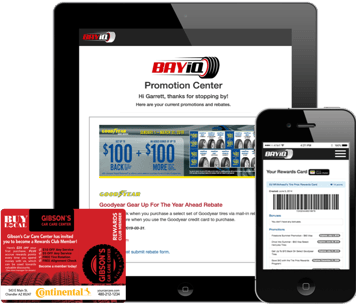
The best advisors know that timing matters. Some customers need education about why a recommendation is being shared with them and how the repair will impact their vehicle. This is especially true for large repairs or maintenance items that they weren’t expecting. Advisors should present inspection results clearly, answer questions, and then ask for approval only after the customer understands the value. If the customer isn’t ready, a well-structured follow-up is key. Use[BayIQ](https://bayiq.com/features/) email and text tools to revisit deferred work, send personalized reminders, or reach out when parts are on promotion.
# **Tracking Advisor Performance & Coaching for Continuous Improvement**
Shops that want sustainable ARO growth must track advisor performance. Monitor metrics such as inspection send rate, recommendation approval rate, average repair order, alignment capture rate, and the ratio of declined vs. approved work. Share results regularly so advisors understand where they excel and where they need coaching. Performance reviews should focus on skill development: communication, documentation, product knowledge, and follow-up habits. Consistency, not pressure, produces long-term results. When advisors receive coaching based on real metrics, their confidence grows, and your ARO will grow with it.
# **Conclusion**
Increasing ARO without being pushy is entirely possible when advisors focus on education, transparency, and customer care. ARO will increase. With the right questions, clear inspection results, thoughtful timing, and ongoing coaching, your shop can build trust while increasing revenue. BayIQ supports this process by helping shops follow up on recommendations, re-engage customers with deferred work, and turn inspection conversations into repeat visits through automated email, text, and loyalty tools. Ready to see how BayIQ fits into your shop’s workflow?[Schedule a demo](https://bayiq.com/request-demo/) to see it in action.
### Contact Us
[+1 480 752 0310](tel:+14807520310)
[Support Portal](https://support.bayiq.com)
[info@bayiq.com](mailto:info@bayiq.com)
7135 E Camelback Rd, Ste 360
Scottsdale, AZ 85251
### Learn More
- [Features](https://bayiq.com/features/)
- [Integrations](https://bayiq.com/integrations/)
- [Pricing](https://bayiq.com/pricing/)
- [About](https://bayiq.com/about-us/)
- [Contact](https://bayiq.com/contact-us/)
- [Blog](https://bayiq.com/blog/)
### Receive our Newsletter
Copyright © BayIQ 2026 | [Privacy Policy](https://bayiq.com/privacy-policy/) | [Terms and Conditions](https://bayiq.com/terms)
-
-
-

```json
{
"@context" : "https://schema.org",
"@type" : "BlogPosting",
"author" : {
"@type" : "Person",
"name" : "BayIQ",
"url" : "https://blog.bayiq.com/author/bayiq"
},
"dateModified" : "2025-12-26T19:30:00.065Z",
"datePublished" : "2025-12-26T19:30:00.000Z",
"headline" : "Service Advisor Tactics to Increase ARO Without Being Pushy",
"image" : [ "https://blog.bayiq.com/hubfs/BayIQ%20Blog%20Post%20Featured%20Images%20(28).png" ],
"mainEntityOfPage" : {
"@id" : "https://blog.bayiq.com/increase-aro-without-being-pushy",
"@type" : "WebPage"
},
"publisher" : {
"@type" : "Organization",
"logo" : {
"@type" : "ImageObject",
"url" : "https://blog.bayiq.com/hubfs/bayiq%20color-4.png"
},
"name" : "BayIQ"
}
}
```